

Quick answer: A clogged kitchen sink on Thanksgiving is almost always the same clog: cooking grease, starchy peels and rice packed into the trap and the drain line behind the wall after a day of nonstop disposal and dishwasher use. A plumber clears it by pulling the trap and running a drain cable through the branch line, usually in 60 to 90 minutes. In the Chicago suburbs, clearing a kitchen line like this typically costs $200 to $450, more after hours or on the holiday itself. The cheapest fix is keeping grease and peels out of the drain in the first place.
This is a case study, but not of one customer. It is a composite of the kitchen calls our plumbers answer every Thanksgiving week, built from the details that repeat almost every time: the same kind of house, the same timeline, the same clog and the same fix. We tell it from both sides — what the homeowner goes through, and what we see once the cabinet doors are open — because each side explains the other. If your sink is already backing up, our kitchen plumbing repairs team can help today. If it isn’t, read on and you may never need us for this one.
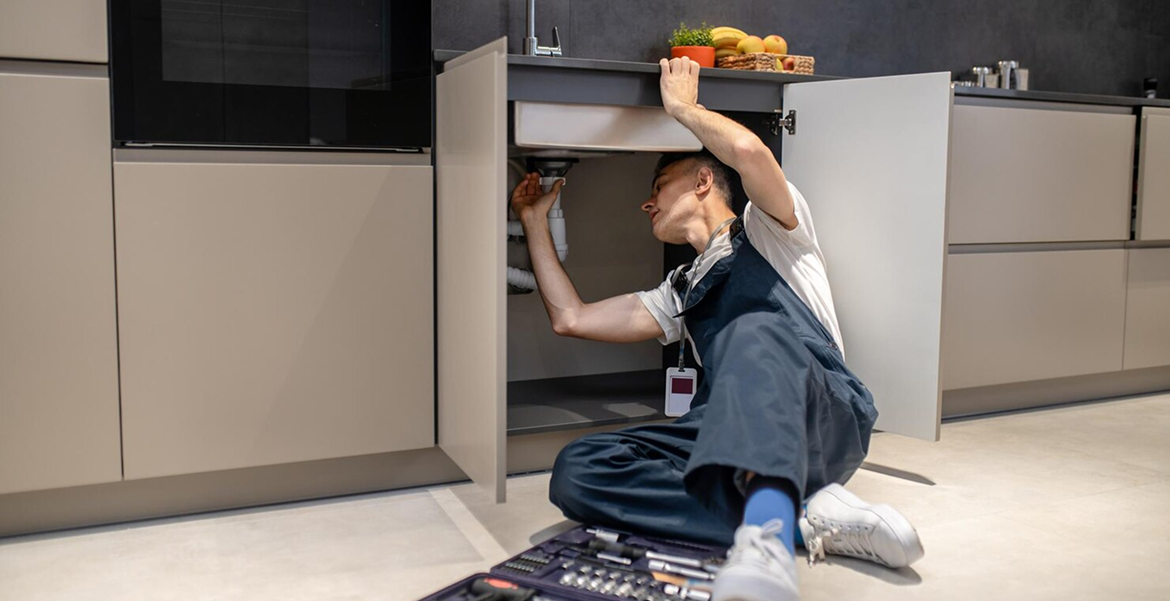
The homeowner’s side: 4:30 p.m. on Thanksgiving Day
The house is a 1970s split-level in Lake County with its original kitchen drain line and a double-bowl sink, garbage disposal on one side. Twelve people are coming. Since nine in the morning the kitchen has worked harder than on any other day of the year: potatoes peeled straight into the disposal, the roasting pan rinsed in the sink, the dishwasher already on its second load.
The first sign is small. The disposal side drains slowly after the potato water goes down. Then the other bowl starts filling with grey water every time the disposal runs. By the time the dishwasher pumps out, both bowls are half full and nothing is going anywhere.
What happens next is what almost everyone does:
- Plunge the sink, which pushes water back and forth between the two bowls but never reaches the clog.
- Pour in a bottle of chemical drain cleaner, which sits on top of the standing water and mostly just makes that water caustic.
- Start loosening the trap under the sink, then stop when the slip nut begins dripping onto the cabinet floor.
Around 4:30 they search for a 24/7 emergency plumber and call. The questions are always the same three: can someone come today, what will it cost, and can we still cook dinner?
Our side: what we find under the sink
From the phone call alone we already have a good idea of what is going on. Both bowls backing up together tells us the blockage is past the point where the two sides join, so it is not just the disposal. The dishwasher pushing water into the sink confirms it: the dishwasher drains through the disposal, and when the line below is blocked, its water has nowhere else to go.
On site, the order of work rarely changes:
- Ask about chemicals first. If drain cleaner went in, we treat the standing water as caustic, put on gloves and eye protection, and bail it out instead of splashing it around. This is the step most homeowners never think about, and it is the main reason we ask people not to reach for the bottle.
- Check the disposal. On this kind of call the disposal is usually jammed with peels. A hex key in the bottom of the unit frees the flywheel, and the red reset button brings it back to life. That fixes the disposal, not the drain.
- Pull the trap. The P-trap is typically packed with a grey paste of starch and fat. We clear it and check the slip-joint washers, which have often been damaged in the attempt to open it.
- Find the real clog. With the trap off, we feed a drain cable into the branch line in the wall. In a typical case the cable stops 12 to 15 feet in, where the line runs along a cold exterior wall toward the main stack.
That location matters. Grease leaves the sink as a warm liquid, then cools and hardens wherever the pipe is coldest. In older Chicago-area homes the kitchen line often runs along an outside wall or through an unheated crawl space, so by late November that section of pipe has been collecting a ring of fat for years. The holiday meal just adds the last inch.
While the cabinet is empty we also look for anything else that has been hiding in there: water stains on the cabinet floor, a soft spot in the base, a slow drip from a supply line. A hidden leak under the sink is common in kitchens that have seen a few rounds of trap removal and reassembly, and it is far cheaper to fix now than after it rots the cabinet.
The fix, step by step
Once the clog is located, the repair itself is straightforward:
- Cable the line. A cutting head on the drain cable breaks up the grease plug and pulls back what it can. We run it through several times until the cable passes freely to the stack.
- Flush while it’s soft. Both bowls are filled and released together to push the loosened grease through before it has a chance to set again.
- Rebuild the trap. Old plastic traps with cracked or cross-threaded nuts are replaced with new parts and fresh washers, so the drip stops for good.
- Test under real load. We run the disposal, drain two full bowls at once and start a dishwasher drain cycle, then check under the cabinet for drips. Only when all three drain cleanly is the job finished.
Time on site: about 75 minutes. Dinner goes ahead an hour late. If the cable had hit something harder than grease — a sagging or broken section, a failing cast-iron line further down, or a drain that clogs again within weeks — the next step would be a camera inspection and targeted drain and pipe repair, rather than cabling the same spot every holiday.
The job in numbers
Here is a typical Thanksgiving kitchen clog laid out as numbers. Costs are typical ranges for the Chicago suburbs, not a quote; the price on your job depends on access, time of day and what we find in the line.
| Item | Typical Thanksgiving kitchen call |
|---|---|
| What was blocked | P-trap plus 12–15 feet of 1½-inch kitchen branch line |
| Cause | Cooking grease bound with potato peels, rice and coffee grounds |
| Time on site | 60–90 minutes |
| Typical cost to clear the line | $200–$450 (higher after hours or on the holiday) |
| If the disposal also needs replacing | Typically $350–$700 installed |
| New trap and washers | Usually under $50 in parts |
| What waiting would have risked | Dishwasher overflow onto the floor, water damage to the cabinet base, and a clog that sets harder overnight |
Why kitchen drains fail around the holidays
A kitchen drain is sized for everyday use. Thanksgiving is not everyday use. Three things happen at once:
- More grease than any other day of the year. Turkey drippings, gravy, butter and roasting-pan residue all find their way into the sink. The same problem shows up at city scale: according to EPA figures summarized by Clemson Extension, grease is the most common cause of reported sewer blockages.
- Starchy food in the disposal. Potato peels, rice, pasta and stuffing turn into a paste that binds with grease instead of washing through.
- Hot water, then a cold pipe. Hot water carries grease further down the line, where it cools and sets in the coldest stretch of pipe — which in late November in northern Illinois means anything near an outside wall.
Chasing grease with hot water and dish soap does not fix it. Both just carry the grease a few feet further before it hardens again.
What goes in the disposal, and what doesn’t
A garbage disposal is built for small, soft scraps rinsed off plates. It is not a replacement for the trash can, and overloading it is the biggest single contributor to the holiday kitchen clogs we see.
Fine in small amounts: soft food scraps from plates, small pieces of cooked vegetables, citrus rinds cut small, and ice cubes, which help clean the grinding chamber.
Keep out of the disposal: grease, fat and oil of any kind; potato and vegetable peels; rice, pasta and bread; coffee grounds; eggshells; bones; and stringy vegetables like celery, onion skins and corn husks.
Peels, coffee grounds and eggshells happen to be the scraps that do the most damage in a drain and the most good in a garden. If you have the space, compost food scraps at home instead. If not, they go in the trash.
What we tell every customer: a pre-holiday kitchen checklist
This part of the case study comes straight from our side of the sink. After enough Thanksgivings, this is the list we leave behind on every kitchen call:
- Keep a grease can by the stove. Pour cooled fat and drippings into an old can or jar, let it harden and throw it away. Wipe greasy pans with a paper towel before they go in the sink.
- Peel into the trash, not the sink. A bowl or bag on the counter for peels prevents most holiday disposal jams.
- Empty the dishwasher before cooking starts. Then run full loads after the meal instead of back-to-back during cooking, so the line isn’t carrying disposal waste and dishwasher water at the same time.
- Run cold water with the disposal. Cold water keeps small bits of fat solid so they are chopped and carried away; hot water melts them into the pipe.
- Know where your shut-offs are. Find the shut-off valves under your sink and for the whole house before you need them. If a supply line or dishwasher hose lets go, you want the water off in seconds, not minutes.
- Treat the drain as a drain, not a trash can. The Metropolitan Water Reclamation District, which treats wastewater for Chicago and most of Cook County, puts fats, oils, grease and food on its list of things that should never go down a drain or toilet.
- Clear a slow drain in October, not November. A slow kitchen sink in the fall is usually a grease ring that is nearly closed. Clearing it on a weekday costs less than clearing it on a holiday.
Try it yourself first, or call a plumber?
Some kitchen clogs really are a five-minute fix. Try these first:
- If only the disposal side is slow or humming, switch it off, free the flywheel with the hex key that came with the unit and press the reset button underneath.
- If only one bowl is slow, seal the other drain with a stopper or wet cloth and plunge the slow side.
- If you are comfortable doing it, clean the trap with a bucket underneath and new washers on hand.
Call a plumber when both bowls back up together, when the dishwasher drains into the sink, when water comes up somewhere else in the house such as a basement floor drain, when chemical drain cleaner is already in the sink, or when the same drain clogs again within a few weeks. Those are signs the problem is in the line, not the sink.
On a holiday it is tempting to hire whoever answers first. A few questions to ask before you hire an emergency plumber — the call-out fee, how the job is priced, whether cabling the line is included — will save you from a surprise bill. Anyone doing plumbing work in Illinois must hold a state license, and you can verify a plumber’s license with the Illinois Department of Public Health in about a minute.
How Iron Wrench Plumbing handles kitchen drain calls
We work out of 1280 Townline Rd. in Mundelein, and holiday kitchen calls are a routine part of our November. Every kitchen call is handled by our licensed, insured plumbers, and it follows the same pattern as the job above: we give you the price before any work starts, clear the line, test it under real load and show you what caused the clog so it doesn’t come back next year.
We answer emergency calls 24/7, holidays included. Call (847) 238-8683 or book online. We serve Mundelein, Libertyville, Vernon Hills, Lake Zurich, Gurnee, Buffalo Grove, Arlington Heights, Schaumburg, Evanston and the rest of Lake County and the north and northwest Chicago suburbs.
Frequently asked questions about clogged kitchen sinks
Why is my kitchen sink clogged on both sides?
When both bowls of a double sink back up together, the clog is below the point where the two drains join, usually in the trap or in the branch line inside the wall. Plunging one side just pushes water into the other. The line needs to be cleared with a drain cable from the trap opening.
Why is my dishwasher draining into my kitchen sink?
Most dishwashers drain through the garbage disposal or the sink tailpiece. When the drain below the sink is partly blocked, the dishwasher’s pump pushes its water up into the sink instead of down the line. Clearing the kitchen drain almost always fixes it; if it doesn’t, the dishwasher drain hose or air gap may be clogged.
Can I use chemical drain cleaner on a clogged kitchen sink?
We don’t recommend it. Chemical cleaners rarely dissolve a grease-and-food clog in a kitchen line, they can damage older pipes and plastic traps, and when they fail they leave caustic standing water for you or your plumber to deal with. The disposal reset button, a plunger or cleaning the trap are safer first steps.
How much does it cost to unclog a kitchen sink?
In the Chicago suburbs, clearing a typical kitchen sink clog costs about $200 to $450, depending on how far into the line the clog sits and whether the call is after hours or on a holiday. If the line keeps clogging, a camera inspection or pipe repair adds to the cost. A plumber should give you the price before starting.
Can I pour grease down the drain with hot water and dish soap?
No. Hot water and soap only keep grease liquid for a few feet. Once it reaches a cooler section of pipe it hardens again and builds up a little more each time. Let grease cool in a can or jar and throw it in the trash.